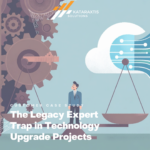
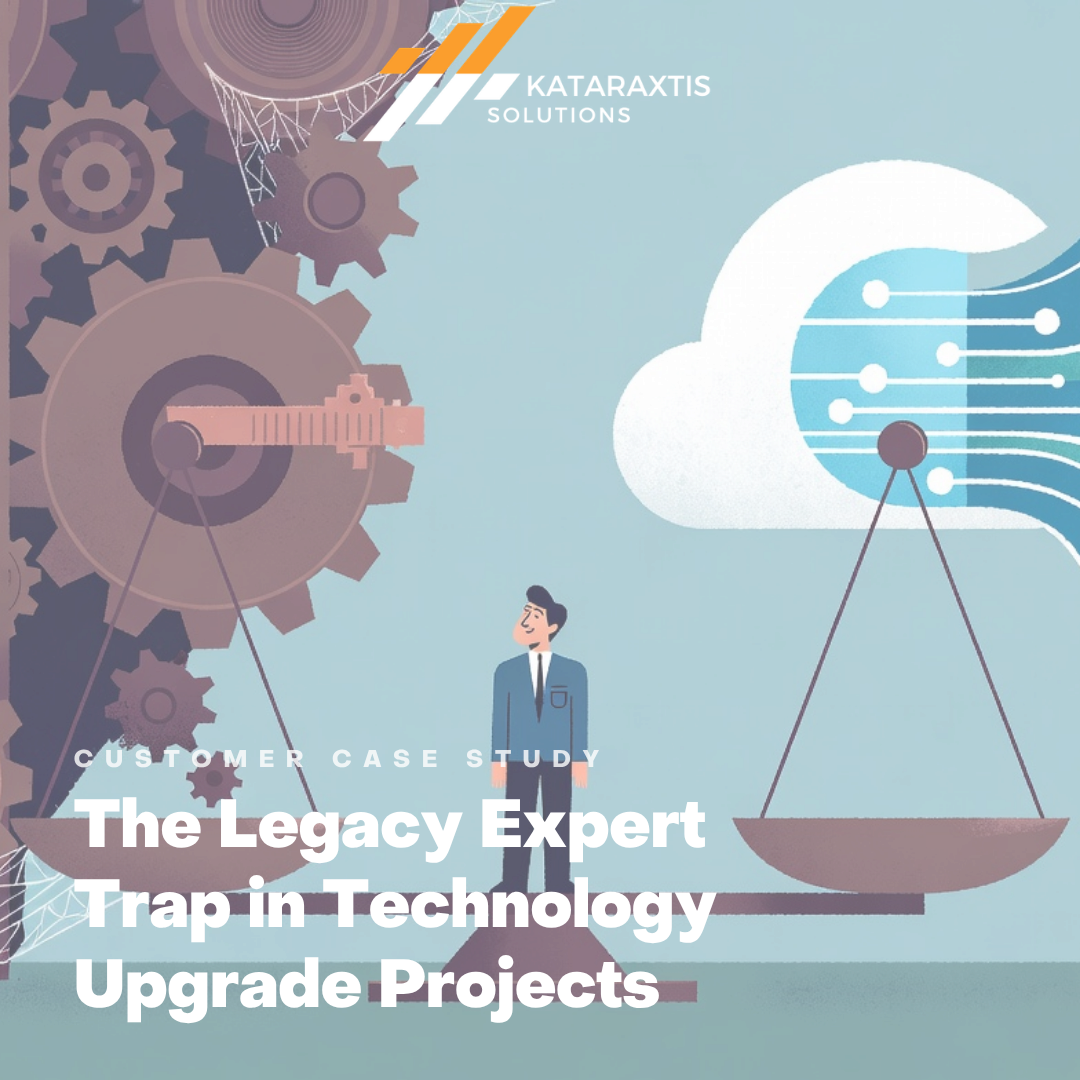
Legacy Software Initiatives frequently encounter significant challenges when organizations overly rely on long-tenured legacy technical staff and advisors for critical decision-making. While these individuals possess deep institutional knowledge of the current state of your software applications and have been trusted advisors for many years, their role as primary stakeholders or approvers often leads to project failure, missed deadlines, replication of legacy processes that are either inefficient or no longer needed and dramatically increases project risk. Executive leadership is well-advised to plan ahead on how to leverage legacy expertise effectively—without allowing it to derail transformation efforts.
In most large-scale software upgrade and digital transformation projects, organizations naturally turn to their most trusted and experienced internal technical staff for guidance. These individuals are often the “go-to” experts who have maintained core systems for years or decades. They understand historical workarounds, business rules, and operational nuances better than anyone else. They have deep working knowledge of your corporate systems and can often reference the exact year and reason each and every feature of your system was requested. These systems are often their babies.
However, when these same experts are positioned as primary decision-makers or technical authorities on modernization projects where their babies are being replaced, a recurring theme emerge that often compromises the outcome of your software upgrade objectives.
Common Challenges
1. Outdated Skills & Knowledge
Legacy experts are typically masters of older systems and processes. Their familiarity with current technology trends, modern architectures, security best practices, and development methodologies is often limited. This can result in recommendations that replicate legacy patterns in new environments rather than embracing more efficient, maintainable approaches.
2. Job Protection & Resistance to Change
There is a natural incentive for individuals whose expertise—and sometimes job relevance—is tied to aging systems to protect the status quo. This can manifest as skepticism toward new platforms, preference for familiar custom solutions, and subtle (or overt) resistance to approaches that reduce reliance on deep legacy knowledge.
3. Blocking Project Progress
- Withholding current-state information: Critical documentation, system details, or business logic may be shared incompletely or delayed.
- Poor decision-making: Insistence on replicating legacy complexity in new systems, leading to unnecessary custom development and technical debt that will require additional, often unaccounted for budget to maintain over time.
- Decision bottlenecks: Over-reliance creates single points of failure in approvals and reviews.
4. Talent Retention Risk
Key legacy experts may become overwhelmed, disengaged, or decide to leave mid-project when change accelerates and they become more and more aware of their obsolescence. Without proper contingencies, this can cause serious knowledge gaps and delays, the building of solutions which are insufficient, overbuilt or even complete project failure.
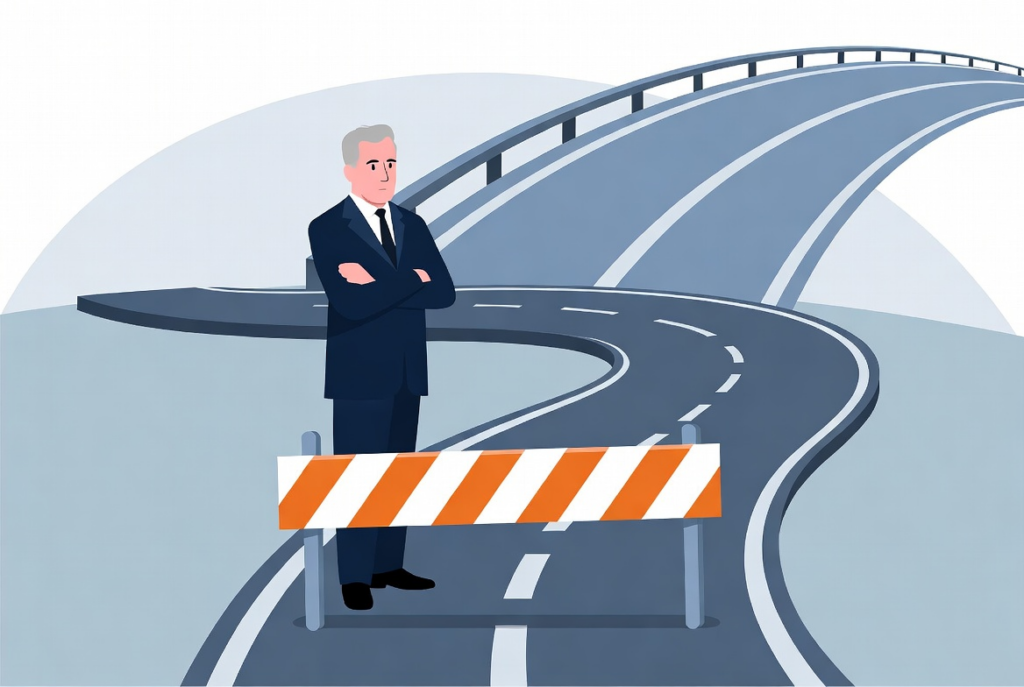
Real-World Impact
Projects where legacy advisors heavily influence architecture and requirements often experience extended timelines, higher costs, increased technical debt, and solutions that fail to deliver expected modernization benefits. In extreme cases, the software may need to be upgraded again, shortly after go-live. Teams that successfully navigate these dynamics do so by changing how legacy expertise is integrated into upgrade teams.
Key Recommendations for Executives
- Limit Legacy Experts to Informational and Advisory Roles
Engage them for requirements gathering, validation of current-state understanding, and historical context. Make it absolutely clear these stakeholders do NOT have any decision making authority over technical architecture, platform choices, or detailed design decisions. Key stakeholders who have been very critical of the current state solutions are often the best stakeholders to empower during software upgrade projects. - Establish Clear Role Boundaries Early
Define and communicate roles explicitly: legacy technical staff as Subject Matter Experts (SMEs) in an advisory capacity only, hands on users who have been highly critical of the current business process empowered as decision makers. This preserves their dignity and knowledge contribution while preventing bottlenecks and empowers those the software is most utilized by to speak up on how to make the process better. - Develop Contingency Plans
- Identify and cross-train backups for critical legacy knowledge.
- Document current-state information aggressively and independently early in the project or before a project even begins.
- Have retention incentives or transition support ready for key individuals.
- Maintain external support options if internal experts disengage.
- Balance Institutional Knowledge with Fresh Perspectives
Create governance structures (e.g., Architecture Review Boards) that include a mix of internal SMEs, external experts, and business stakeholders. Weight decisions toward long-term maintainability, scalability, and alignment with industry best practices rather than comfort with legacy patterns. - Support Change Management Address the human element proactively through training, involvement in solution design (within defined boundaries), and clear communication about how roles will evolve rather than disappear.
Conclusion
Legacy technical staff are invaluable assets whose knowledge must be captured and respected. However, placing them in authoritative roles on modernization projects often creates misalignment between institutional experience and forward-looking objectives. By restructuring their involvement to strictly informational and advisory contributions, executives can reduce risk, accelerate delivery, and achieve better outcomes. Successful transformations treat legacy expertise as one important input among many—not the guiding force.